

About AHRAdvances in Humanities Research (AHR) is a monthly peer-reviewed journal hosted by Academy of European Cultures, Tongji University, and published by EWA Publishing. AHR focusing on classic and emerging humanities topics spanning literature & linguistics, fine arts, history, architecture, philosophy and Marxist studies. Rooted in core humanistic missions, the journal values research’s policy reference significance and far-reaching cultural inheritance & communication value, while emphasizing disciplinary construction support and talent cultivation value of humanistic scholarship, and provides systematic theoretical support and standardized research models for liberal arts scholars, cultural heritage practitioners, cultural planners and art designers to realize cultural inheritance and industrial planning based on the above humanistic values.For more details of the AHR scope, please refer to the Aim&Scope page. For more information about the journal, please refer to the FAQ page or contact info@ewapublishing.org. |
|
Aims & scope of AHR are: |
Article processing charge
A one-time Article Processing Charge (APC) of 450 USD (US Dollars) applies to papers accepted after peer review. excluding taxes.
Open access policy
This is an open access journal which means that all content is freely available without charge to the user or his/her institution. (CC BY 4.0 license).
Your rights
These licenses afford authors copyright while enabling the public to reuse and adapt the content.
Peer-review process
Our blind and multi-reviewer process ensures that all articles are rigorously evaluated based on their intellectual merit and contribution to the field.
Editors View full editorial board

Leicester, UK
llandy@dmu.ac.uk

Shanghai, China
lengxin@tongji.edu.cn

Huntsville, USA
mallen@shsu.edu

Sydney, Australia
yu.sang@sydney.edu.au
Latest articles View all articles
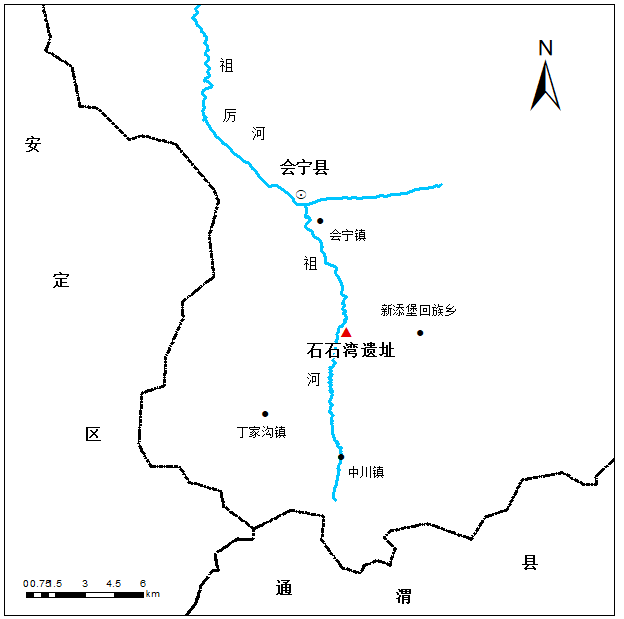
The Shishiwang site, located in the Zuli River basin, is a relatively large prehistoric site within this watershed. Investigations indicate that the site contains cultural remains from the Yangshao, Majiayao, and Qijia cultures, with Yangshao cultural remains being predominant. The survey provides abundant material evidence for understanding the dissemination of Yangshao culture within Gansu Province and patterns of human migration.

 View pdf


This paper focuses on traditional Chinese patterns, taking lattice windows—an architectural element that integrates both decorative and cultural functions—as a representative carrier to explore their lineage of inheritance and pathways for modern innovation. The study begins with a systematic review of the essential characteristics, aesthetic implications, and cultural values of traditional Chinese patterns. Building on this foundation, it adopts lattice windows as the central research object and conducts a comprehensive analysis from multiple perspectives, including historical evolution, formal characteristics, application logic, and hierarchical differentiation. Furthermore, it elucidates the underlying principles governing the integration of traditional patterns with modern design concepts in terms of formal translation, functional reconstruction, and cultural expression. The paper also demonstrates the key mechanisms through which traditional patterns achieve temporal transformation and innovative development within contemporary environmental spaces. This research holds significant theoretical and practical value in promoting the contemporary revitalization of traditional design culture and advancing a deeper dialogue between traditional cultural heritage and modern design paradigms.
View pdf
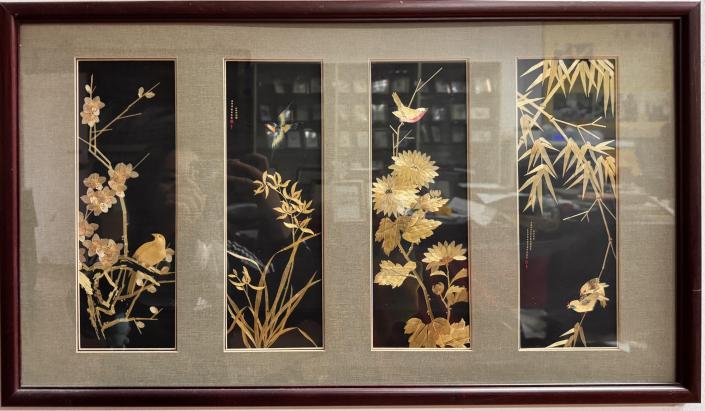
Against the backdrop of the transition from traditional craftsmanship to contemporary design, Henan wheat straw painting employs natural plant fibers as its primary medium, relying on the arrangement of linear materials and the expression of inherent luster. However, it currently faces challenges such as structural rigidity and insufficient design transformation. Grounded in design methodology, this study begins with an analysis of material language, systematically examines structural characteristics and formal logic, and constructs a pathway for design transformation. It further integrates analyses of application expansion, product structuring, and brand consolidation. The findings indicate that reinforcing material properties and reconfiguring formal structures can effectively broaden its application scope and enhance its adaptability to contemporary contexts. The study argues that this pathway can provide a valuable reference for the design transformation of traditional plant fiber crafts.
View pdf
Emotional capitalism represents a new capitalist paradigm where emotional and economic relations are deeply intertwined. Under the collusion of digital technologies and capital, this phenomenon manifests in three key dimensions: In production sectors, the boundaries between entertainment and labor become increasingly blurred, with emotional labor gradually transforming into a critical tool for capitalist exploitation. In consumption spheres, people shift from material possession to the pursuit of symbolic meaning, with symbolic consumption replacing material consumption as the dominant trend. Within social interactions, pure emotional connections are weaken and virtual interactions increasingly dominate relationships. These challenges urgently require solutions through technological empowerment, institutional regulation, and conceptual transformation to achieve genuine emotional liberation and the comprehensive development of human potential.
View pdf
Volumes View all volumes
2026
Volume 13March 2026
Find articlesVolume 13April 2026
Find articlesVolume 13October 2026
Find articles2025
Volume 12August 2025
Find articlesVolume 12May 2025
Find articlesVolume 12November 2025
Find articlesAnnouncements View all announcements
Advances in Humanities Research
We pledge to our journal community:
We're committed: we put diversity and inclusion at the heart of our activities...
Advances in Humanities Research
The statements, opinions and data contained in the journal Advances in Humanities Research (AHR) are solely those of the individual authors and contributors...
Indexing
The published articles will be submitted to following databases below: