Articles in this Volume

Research Article Open Access
The communicability of art and the problem of private language in public narrative space
This paper examines how private artistic language intervenes in public narrative space, focusing on the problem of communicability faced by private artistic experience in processes of public expression and understanding. By introducing the philosophical problem of private language, it argues that private experience inevitably undergoes loss, distortion, and interpretive uncertainty when translated into public forms. Drawing on Wittgenstein’s rejection of private language and Kant’s theories of aesthetic ideas, genius, and taste, the paper reveals a structural tension between private experience and public comprehension. It further engages with John Dewey’s notion of art as evocative communication, addressing both its potential for facilitating communication and its limitations in relation to abstract ideas. Through experimental studies on textual annotation, the paper demonstrates that text is not a neutral medium but can shape and constrain interpretation. Finally, it argues that public narrative space, while enabling artistic exchange, may also intensify the challenges posed by private language, leaving private artistic language in a persistently unresolved and tension-filled condition within public narrative space.
Show more
Read Article PDF
Cite
Research Article Open Access
How different prompts affect GPT-5's Chinese-to-English translation performance of government work reports
Article thumbnail
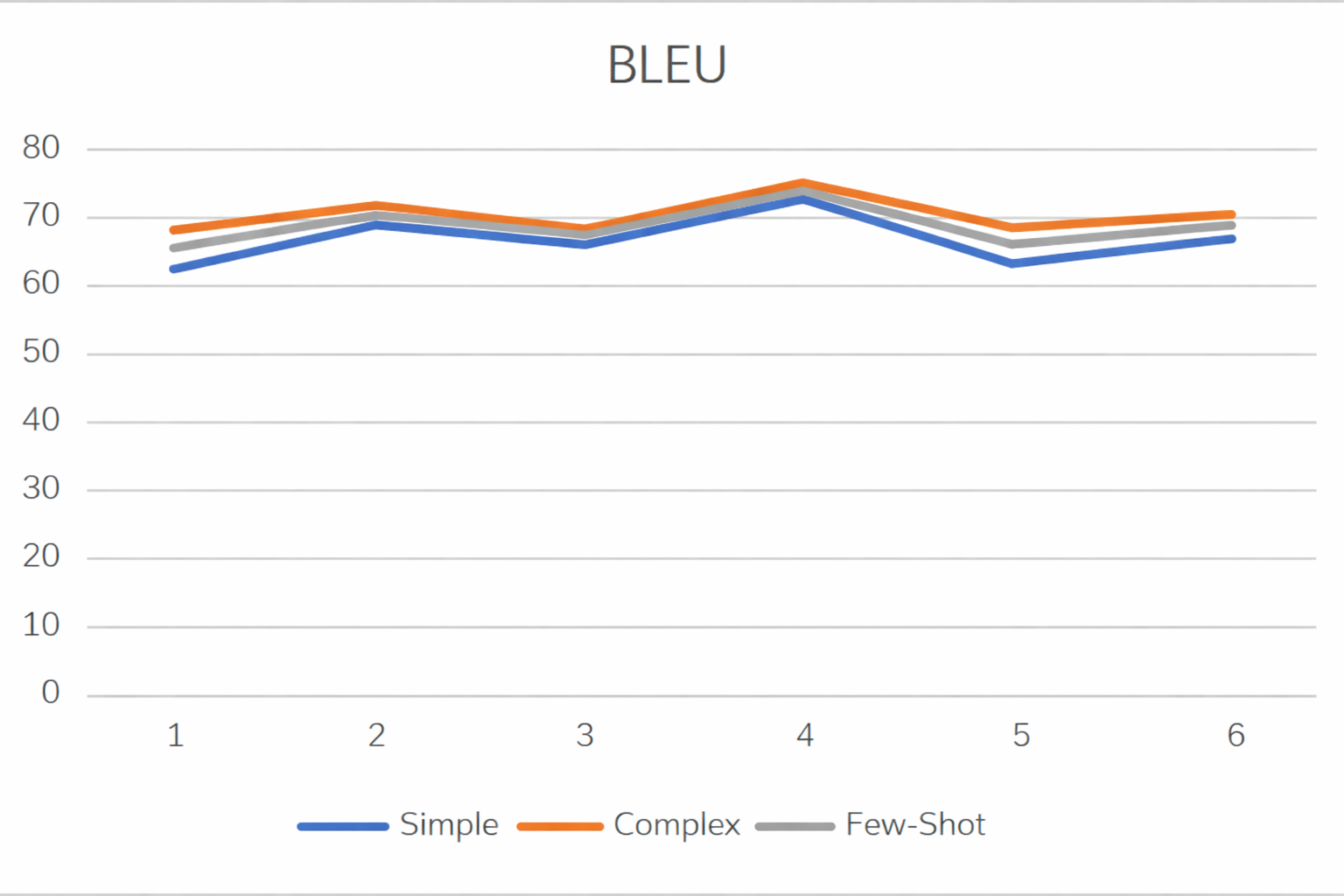
In recent years, the rapid advancements of Large Language Models (LLMs) such as ChatGPT and GPT-5 have ushered machine translation into a new era. This study examines the impact of different prompts - simple prompts, complex prompts, and few-shot prompts - on GPT-5’s translation performance for the 2024 Chinese Government Work Report, finding that while complex prompts yielded better results in automatic evaluation metrics, human assessment showed no substantial differences in translation quality between simple and complex prompts. The few-shot prompting approach displayed potential in adapting to the text style, but still faced common machine translation challenges, underscoring the importance of thoroughly analyzing text requirements and providing targeted prompt instructions when utilizing large language models for translation, as well as the need for future translators to master the characteristics of these models and develop the ability to identify and adjust translation issues, in order to enhance the practical effectiveness of machine translation.
Show more
Read Article PDF
Cite
Research Article Open Access
Research on the design of campus sustainable development signage system based on intangible cultural heritage symbols—a case study of guangdong business and technology university
Article thumbnail
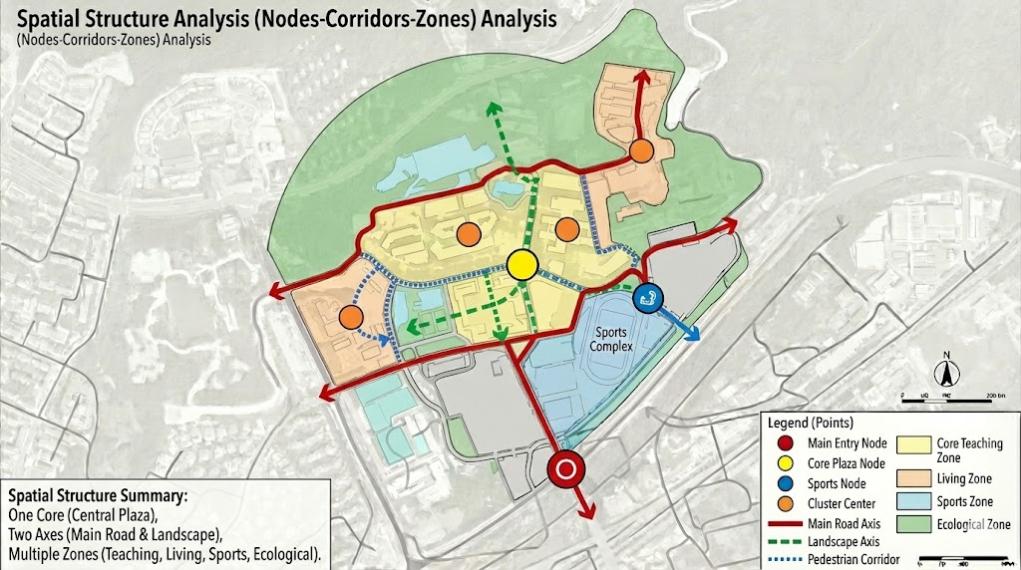
In the context of cultural confidence and the safeguarding of Intangible Cultural Heritage (ICH), Chinese universities are increasingly pursuing campus cultural branding, yet many existing wayfinding systems lack regional identity. This study aims to develop a sustainable signage strategy for Guangdong Business and Technology University by integrating local ICH symbols like Duan inkstone and Cantonese embroidery into an upgraded wayfinding system. Guided by semiotic theory, we propose a design framework that translates heritage elements through extraction, abstraction, and system-wide application, ensuring both functional navigation and place-based meaning. The framework was evaluated through a questionnaire survey of 250 students and visitors, comparing perceptions of the proposed design with the current system. Results indicate that the ICH-integrated design performs better across key outcomes, with cultural association improving by 91.1% and visual recognizability improving by 29.3%. These findings suggest that modernized semiotic translation of ICH symbols, combined with sustainable materials and fabrication considerations, can strengthen spatial guidance and cultural belonging, offering a practical and transferable approach for campus wayfinding upgrades.
Show more
Read Article PDF
Cite
Research Article Open Access
From cultural symbiosis to civilizational integration: archaeological and ancient DNA evidence from the Dasongshan cemetery in central Guizhou from a community perspective
Article thumbnail
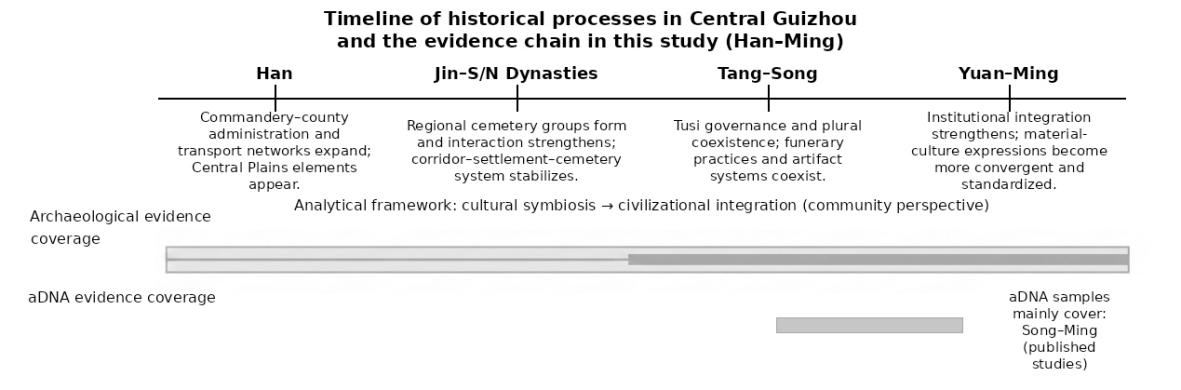
Taking the Dasongshan cemetery in the Guian New Area as a core case study, this paper integrates mortuary archaeological evidence with ancient DNA results within a “community” analytical framework to examine the transition in central Guizhou from pluralistic cultural symbiosis to institutionalized civilizational integration. Archaeological evidence indicates that since the Han–Jin period, external institutions and material cultures were continuously introduced and long coexisted with local burial customs. Ancient genomic data reveal a population structure dominated by Yellow River–related ancestry, stably overlaid with components from South China–Southwest China and Southeast Asia, alongside a small number of outlier individuals, reflecting patterns of intermarriage and regional interaction. The findings demonstrate that central Guizhou functioned as a key node where multi-source populations converged and were incorporated into state governance networks.
Show more
Read Article PDF
Cite
Research Article Open Access
The cultural logic of dance and music: Tang dynasty female music-and-dance figurines from Henan
Article thumbnail
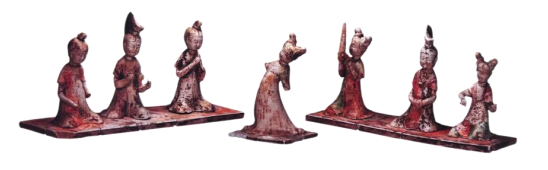
Under the impetus of the ritual–music system and prevailing social customs, dance and music in the Tang dynasty flourished to an unprecedented degree. Against this background, female music-and-dance figurines unearthed in the Henan region emerged as important carriers that combined ritual–customary functions with artistic significance. These figurines not only recreate the dynamic scenes of dance and musical performance but also embody, through their figurative design, the cultural construction of female identity and temperament. Taking the question of “why dance and music” as its central concern, this paper examines the types, forms, and design language of music-and-dance figurines from Henan, exploring how dynamic aesthetic qualities of dance and music are expressed through posture, costume, and accompanying instruments, as well as how the spirit of music and dance is conveyed through facial expression and narrative composition. In doing so, the study reveals a form of female consciousness shaped by the coexistence of ritual discipline and individual expression. These figurines thus serve as a vital medium for understanding the aesthetic sensibilities, institutional logic, and cultural spirit of Tang dynasty society.
Show more
Read Article PDF
Cite
Research Article Open Access
Spatial narrative and the multidimensional innovation ofRecords of the Grand Historian
This paper aims to explore spatial narrative in the Records of the Grand Historian using spatial narrative theory, thereby further studying the multidimensionality and groundbreaking nature of its narrative. Spatial narrative theory originated in the West and is a major theory in the study of novels. This paper applies this theory to the study of the Records of the Grand Historian because its writing style is highly vivid, reminiscent of a novel, and the phrase "The Grand Historian said" also exhibits the characteristic of narrator intervention found in novels. Although the Records of the Grand Historian is not a fictional text, its literary quality is exceptionally outstanding compared to other previous historical works. Furthermore, the Records of the Grand Historian also breaks through linear time and focuses on spatial narrative. Therefore, this paper uses textual research and case study methods to study the spatial narrative in the Records of the Grand Historian. Drawing on the concept of spatial narrative proposed by Chinese scholars and the spatial narrative theories of Foucault and Lefebvre in Western literary theory, this paper explores both the macroscopic spatial narrative in the Records of the Grand Historian and the microscopic spatial narrative in specific chapters of the Records of the Grand Historian. Ultimately, it was concluded that the Records of the Grand Historian is a historical work that transcends the fluidity of time, and is also an extremely exquisite work that combines documentary and literary qualities in terms of spatial narrative.
Show more
Read Article PDF
Cite
Research Article Open Access
A study on the integration mechanism between generative algorithms and paper-cutting art
Article thumbnail
This paper explores the integration mechanism between generative algorithms and traditional Chinese paper-cutting art. Against the backdrop of rapid advancements in digital technology, generative algorithms have become an important tool in artistic creation, revitalizing paper-cutting art through the modernization of traditional artistic forms. Beginning with the shift in visual culture in the digital age, this paper analyzes how generative algorithms promote new modes of artistic expression. It then discusses the modern transformation of paper-cutting art, particularly focusing on the application and transformation of digital technologies and generative algorithms in paper-cutting design. Finally, using the design of theatrical characters in paper-cutting style as a case study, it compares the performance of different AIGC tools in generating traditional artistic symbols and examines the potential of generative algorithms in art education through curriculum practice. The study shows that generative algorithms not only improve the efficiency and diversity of traditional art creation but also provide ample space for its inheritance and innovation.
Show more
Read Article PDF
Cite
Research Article Open Access
Linguistic and dialectal bias in large language models: a review of evidence, mechanisms, and implications (2018–2025)
Large Language Models (LLMs) increasingly mediate communication, evaluation, and decision-making across social and institutional domains. While prior work has documented various forms of bias in language technologies, linguistic variation has received comparatively less integrated treatment despite its deep sociolinguistic significance. This review synthesizes recent research on how LLMs reflect and reinforce linguistic bias toward nonstandard dialects, with a focus on African American English and other marginalized varieties. Drawing on studies spanning natural language understanding, reasoning, speech recognition, and conversational systems, we show that LLMs exhibit consistent performance disparities when processing dialectal inputs, even when semantic content is held constant. Beyond accuracy degradation, emerging evidence demonstrates that dialect functions as a social signal that triggers differential judgment, stereotyping, and covertly racist decision-making in high-stakes contexts. We organize the literature around four themes: dialect-based performance gaps, dialect-triggered social evaluation, measurement frameworks for linguistic bias, and proposed mitigation strategies. While recent benchmarks and adaptation methods improve robustness, we argue that many approaches treat dialect bias as a technical deficiency rather than a sociotechnical problem rooted in language ideology and power. By synthesizing research across technical, social, and evaluative dimensions, this review identifies methodological gaps and proposes directions for developing linguistically and culturally robust LLMs.
Show more
Read Article PDF
Cite
Research Article Open Access
From "strategy" to "resonance": emotional narration in otome games
This paper explores how otome games have evolved from their original “strategy-based” logic into an interactive narrative medium focused on “emotional resonance.” First, it sorts out the definition and development context of otome games, as well as the social, cultural, and technological drivers behind their growing demand, pointing out that they respond to the dilemmas modern women face in real intimate relationships and their pursuit of subjectivity. Furthermore, the paper analyzes the core emotional design mechanisms of otome games, including branching narratives and multiple-ending structures, affinity and interactive feedback systems, and realistic scenario construction driven by voice, haptics, and AI technologies. It argues that these mechanisms collectively construct a form of “digital intimacy” that immerses players and encourages their active co-creation. Finally, the paper examines the cultural implications of otome games, suggesting that beyond entertainment consumption, they provide women with a utopian space for identity construction and emotional exploration, and discusses the ethical challenges that may emerge in future development. This study aims to reveal the underlying emotional structure and socio-psychological significance of otome games as an important cultural phenomenon.
Show more
Read Article PDF
Cite
Research Article Open Access
A study on translation strategies for political external communication texts from the perspective of national image construction: an eco-translatological analysis of the English translation ofQiushi(2021–2024)
Translation for political external communication has become a critical avenue for the construction of national image. As a core medium for conveying China’s policy ideas, Qiushi magazine occupies a pivotal position in the dissemination of the Chinese government’s governing philosophy. Its English edition serves as an important window through which the international community understands China’s political system and cultural values, and the quality of its translation bears directly on the effectiveness of China’s international discourse. Grounded in the theoretical framework of Eco-Translatology, this study takes representative Qiushi texts published between 2021 and 2024 as case studies to examine how political external communication translation can effectively achieve accurate linguistic transformation, convey cultural connotations, and integrate cross-cultural communicative intentions. The paper aims to demonstrate how such translation practices contribute to the construction of China’s national image and the shaping of international recognition, while also offering practical insights for the translation of similar text types.
Show more
Read Article PDF
Cite