Articles in this Volume

Research Article Open Access
Mechanisms of cross-linguistic transfer in stream-of-consciousness narrative: English and Chinese translations of Dostoevsky'sNotes from Underground
The translation of stream-of-consciousness narrative—characterized by fragmented psychological time and disrupted syntax—posed a significant challenge in literary translation, especially between distantly related languages. This study examined this mechanism through Fyodor Dostoevsky’s psychologically innovative work, Notes from Underground. A purpose-built parallel corpus was constructed, comprising three representative interior monologues in the original Russian alongside English translations—Richard Pevear and Larissa Volokhonsky’s foreignizing version and Constance Garnett’s domesticating approach—as well as Zhonglun Zang’s Chinese translation, which employed language-specific compensatory strategies. Manual syntactic annotation, combined with reader-response experiments, was used to quantify key metrics including syntactic transformation, punctuation fidelity, and the preservation of Bakhtinian polyphonic contradictions. Results revealed a core tension: the foreignizing strategy of Pevear and Volokhonsky effectively recreated the original’s "neurotic rhythm", yet compromised readability for English readers. Garnett’s domesticating translation enhanced fluency at the expense of psychological authenticity. Constrained by the typological distance between Chinese and Russian, Zang’s Chinese version employed creative compensatory mechanisms unique to the target language. This study provided a novel empirical framework for translating stream-of-consciousness features and offered practical strategies for retranslating Russian literary classics into both Indo-European and Sino-Tibetan languages.
Show more
Read Article PDF
Cite
Research Article Open Access
Ethnic HeQin: a concentrated embodiment of the peace-oriented nature of Chinese civilization
The HeQin policy is a unique political strategy in ancient China for handling ethnic relations, and constitutes a historical practice of ethnic interaction, exchange, and integration of the Chinese nation. The purpose of forming and maintaining HeQin-based ethnic relations is not only to end wars or eliminate the risk of war, but also to further achieve ethnic peace and friendship through the establishment and maintenance of HeQin relations. Ethnic HeQin represents a historical practice of the Chinese nation’s unremitting pursuit of peace—a fine tradition—and serves as a concentrated embodiment of the peace-oriented nature of Chinese civilization. Most of the historical episodes of peaceful and friendly ethnic relations in China began with the formation of HeQin-based ethnic relations; the sustained development of such peaceful situations was mostly based on the continuous maintenance of HeQin relations; and the eventual breakdown of peaceful and friendly situations often started with the disruption of HeQin relations. The frequent formation and long-term maintenance of ethnic HeQin relations in Chinese history have, to a certain extent, fostered the development of a historical mindset and fine tradition of resolving ethnic contradictions and conflicts through peaceful negotiations.
Show more
Read Article PDF
Cite
Research Article Open Access
Reimagining circularity: the eco-philosophical value of second-hand school uniforms in the UK
Article thumbnail
This study examines consumer resistance to the reuse value of the UK second-hand school uniform market, drawing on eco-philosophy and circular economy frameworks. Specifically, it examines how environmental knowledge, the 3R principle (reuse, reduce, recycle), cost saving, and perceived social norms shape attitudes toward reusage. A Google survey of parents, students, and community members provided quantitative data, which were used to connect three eco-philosophy frameworks and address gaps in the current understanding. This article examines the issue through three eco-philosophy frameworks, highlighting the need for stronger policies that promote the adoption of second-hand school uniforms.  Further findings from case studies highlight that decision-making motivation, social norms, and incentives are central to participation. Overall, the study confirms that ecological ethics, school culture, and behavioral change collectively inform policies and environmental benefits of low-carbon lifestyles, enhancing sustainable uniform reuse in the UK.
Show more
Read Article PDF
Cite
Research Article Open Access
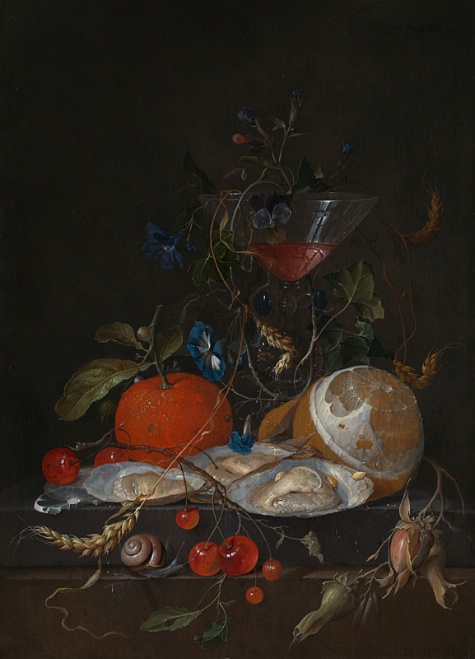
The transformation of nature: specimen-making in Flemish still life painting
Article thumbnail
This essay explores how seventeenth-century Flemish still life painting transformed natural objects into artificial, collectible forms, reflecting changing human attitudes toward ecology, science, and material culture. Focusing on Jan Davidsz. de Heem’s Still Life (c.1664), it argues that the artist’s meticulous depiction of fruits, flowers, and animals, arranged in temporally impossible combinations, reveals a process similar to specimen-making. Through hyperrealism and Baroque lighting, natural elements are isolated, polished, and aestheticized, losing their organic temporality to become preserved artifacts. This transformation aligns with early modern practices of collecting and classifying nature, where artistic representation intersected with the rise of scientific observation and the commodification of natural objects. Painters such as Jan van Kessel further emphasized this taxonomic impulse, depicting insects and plants against neutral backgrounds as visual specimens. By framing nature within a controlled pictorial space, Flemish still life painting mirrors Enlightenment efforts to catalogue and possess the natural world. The essay concludes that these works function as ecological portraits, encapsulating both fascination and control, transforming nature into an object of study, consumption, and display. In this sense, seventeenth-century still life reveals the convergence of art, science, and capitalism, shaping the way nature was represented and understood in early modern Europe.
Show more
Read Article PDF
Cite
Research Article Open Access
The triple transcendence of the cyborg body: Elena's gender, memory, and narrative practice inThe Absent City
Ricardo Piglia (1940–2017), the Argentine writer, sets his novel The Absent City (1992) against the backdrop of Argentina’s dictatorship. Through the suspense framework of detective fiction and the posthuman imagination of science fiction, the novel constructs a profound political allegory. The central figure in the novel—the cyborg Elena—achieves a triple revolutionary transcendence of traditional human identity through the practices of the posthuman body: the fluid construction of gender identity, the resistant inscription of memory politics, and the generative force of narrative reality. Elena’s cyborg body deconstructs singular authority across the layers of story, narration, and reality, driving the novel toward a hybrid, fluid, and heterogeneous New Baroque aesthetic. This demonstrates Piglia’s forward-looking exploration of the constructive potential of narrative in the posthuman era.
Show more
Read Article PDF
Cite
Research Article Open Access
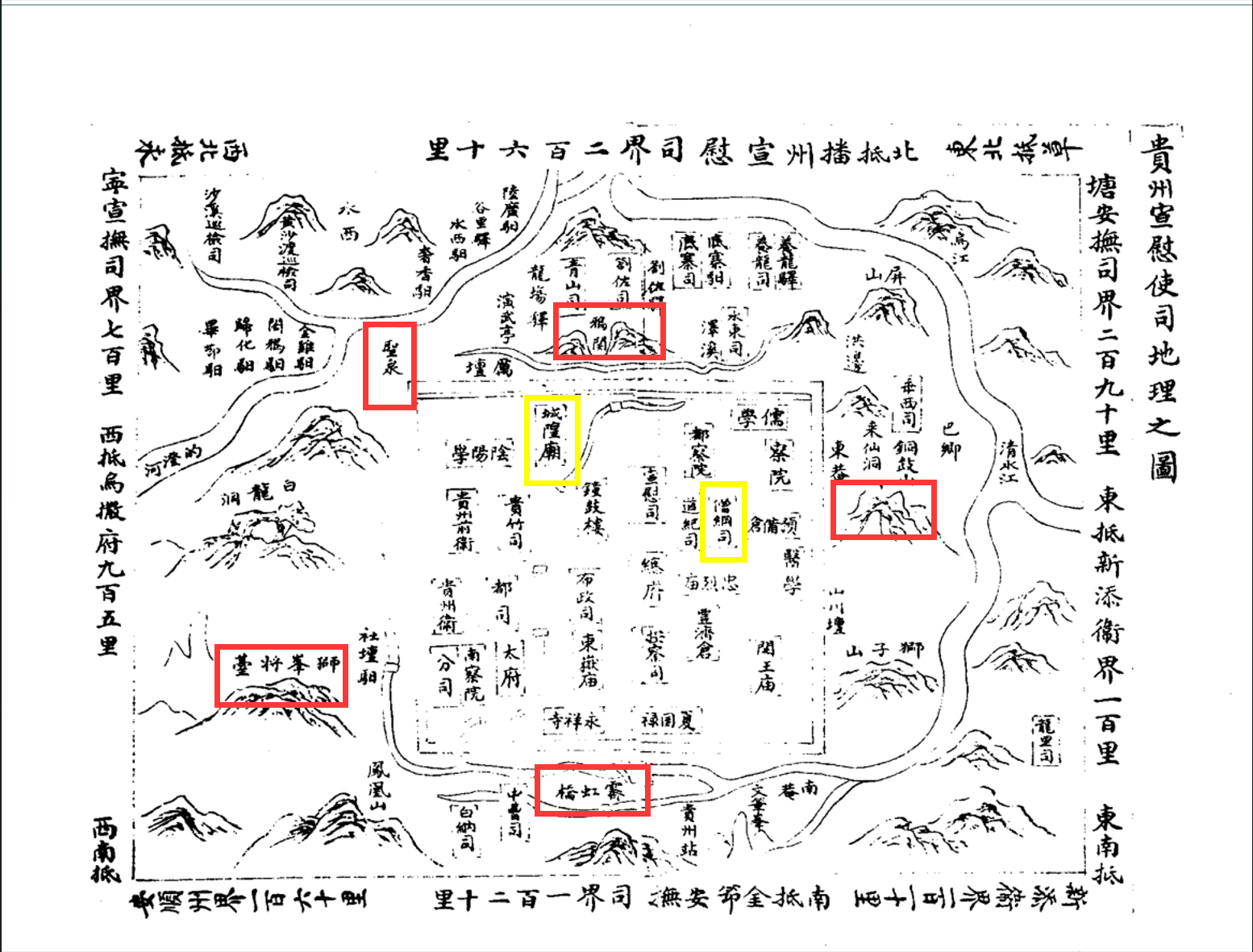
Analysis of the evolution and cultural imagery of Guiyang's "Eight Scenic Spots" since the Ming and Qing Dynasties
Article thumbnail
Guiyang's "Eight Scenic Spots" is a product of the integration of Guiyang's natural landscapes and traditional Chinese culture, and also a local historical and cultural heritage formed through layered construction. In history, Guiyang's "Eight Scenic Spots" have been recorded in local chronicles, biographies, poetry, collected works, etc., which are of great historical and cultural value. Since the Ming and Qing Dynasties, Guiyang's "Eight Scenic Spots" have undergone four changes, forming five sets of Guiyang's "Eight Scenic Spots" as seen in current local chronicles. In the early stage, natural landscapes dominated, while in the Republic of China period, humanistic landscapes became dominant. Their distribution scope gradually narrowed: from the circular structure surrounding Guiyang Prefectural City in the Ming and Qing Dynasties to the point-like distribution focusing on the Jiaxiu Pavilion area in Guiyang during the Republic of China period. Moreover, the names of the "Eight Scenic Spots" abandoned the four-character idioms commonly used in the Ming and Qing Dynasties and adopted the original names of the landscapes instead. The selection of the "Eight Scenic Spots" is characterized by strong military themes and heroic feelings. These landscapes not only showcase Guiyang's abundant high-quality water resources and magnificent mountain landscapes but also profoundly reveal Guiyang's profound historical and cultural heritage and unique humanistic feelings. The evolution process of Guiyang's "Eight Scenic Spots" not only witnesses its trajectory from prosperity to decline but also profoundly reflects the vicissitudes of Guiyang's society. Therefore, Guiyang's "Eight Scenic Spots" not only provide a unique perspective for us to observe Guiyang's urban development but also serve as an important window for us to deeply explore Guiyang's history and culture.
Show more
Read Article PDF
Cite
Research Article Open Access
Ecological wisdom of traditional Tibetan settlements
Article thumbnail
For thousands of years, traditional Tibetan settlements have embodied ecological wisdom that harmonizes the relationship between humans and nature. Based on literature review and field investigation, this paper explores the ecological wisdom of traditional Tibetan settlements from the perspectives of site selection, resource utilization, architectural construction, and cultural belief. From geographical adaptation in site selection and spatial layout, to the circular concept of resource utilization, from climate-responsive architectural forms to the ecological constraints of spiritual beliefs [1], Tibetan ancestors developed a systematic wisdom that balanced survival needs with ecological protection while coexisting with an extreme environment. This wisdom provides practical reference for contemporary urban and rural planning, architectural design, and ecological protection, thereby contributing to sustainable development.
Show more
Read Article PDF
Cite
Research Article Open Access
Two perspectives on early encounters with the West: a comparative study of Bin Chun'sCheng Cha Notesand Zhang Deyi'sMaritime Travel Accounts
This paper focuses on Bin Chun, one of the first official envoys to the West in the late Qing Dynasty, and his work Notes on Riding the Raft, as well as translator Zhang Deyi and his Accounts of Maritime Voyages. Through a comparative literary analysis approach, the method systematically examines the differences between the two works in terms of narrative perspective, focal point of observation, stylistic features, and cultural mentality. The study shows that Bin Chun, as a represeyuanntative of the traditional literati, upheld the classical note-writing tradition, depicting the West with an aestheticized and assimilatory gaze, reflecting a sense of cultural superiority; whereas Zhang Deyi, as a modern intellectual trained at the Tongwen Guan, adopted a technical and analytical gaze, focusing on objective recording and the exploration of mechanisms, exhibiting characteristics of early modern enlightenment. This paper argues that these two works respectively represent two distinct ways in which Chinese modern intellectuals responded to Western civilization, marking a key turning point in the evolution of traditional Chinese travel writing toward modern documentary prose.
Show more
Read Article PDF
Cite
Research Article Open Access
Depth and value: content and significance of long-form narration in online audio
In the current era where visual media dominate audiences' daily entertainment and other activities, the "fragmented" pattern of information consumption seems to have become the mainstream. However, long-form narrative programs in online audio, represented by podcasts and audio dramas, have emerged as a non-negligible communication force. This paper analyzes this form from three aspects: content construction, value dimensions, and cultural significance. In terms of content, it explores the diversity of narrative subjects, the cross-border integration of themes, and the innovation of narrative structures; in terms of value, it elaborates on its role in knowledge dissemination, emotional connection, and preservation of cultural memory; in terms of significance, it reveals its impact on the balance of media ecology, the expansion of public discourse space, and the revival of auditory culture. Long-form narrative content in online audio holds significant contemporary significance that deserves attention.
Show more
Read Article PDF
Cite
Research Article Open Access
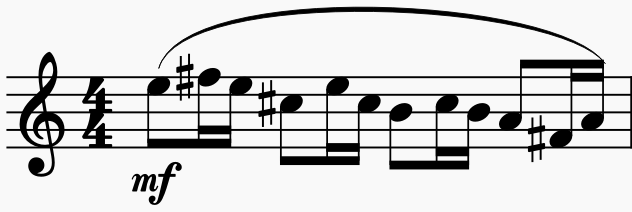
Ye Xiaogang'sLin'an Qibu II: exploring the "Qǐ-Chéng-Zhuǎn-Hé" structural thinking in "Sailing on West Lake After a Morning of Sunshine and Rain"
Article thumbnail
Modern Chinese music has, from its inception, demonstrated creativity rooted in native linguistic and cultural traditions. Particularly after the mid-1980s, this creativity was no longer limited to the mere use of Chinese traditional musical materials or the presentation of national styles, nor simply an expression of Chinese cultural spirit and thought. Instead, it manifested as development and innovation within modern compositional techniques themselves. It is evident that Chinese composers have made distinctive contributions in many areas, including pitch structures, harmonic organization, and contrapuntal logic. In particular, regarding pitch structures and related harmonic techniques and tonal thinking, Chinese composers have pursued developments and innovations based on the language and forms of Chinese traditional music [1]. As a prominent contemporary Chinese composer, Ye Xiaogang possesses a profound and distinctive understanding of musical structure. His works demonstrate a high degree of innovation and integration in structural design. Rather than adhering strictly to traditional forms, he tailors and innovates structures according to expressive needs. In an interview, he stated, “Chinese musical structure follows “Qǐ-Chéng-Zhuǎn-Hé” (beginning–development–turn–conclusion). My musical structures cannot be found in any Western musical forms; this is my unique advantage.” Ye skillfully draws on structural techniques from Western modern music while simultaneously integrating structural thinking rooted in Chinese traditional music. This Sino-Western fusion in structural thinking allows his compositions to be both innovative in the modern musical sense and imbued with the aesthetic charm of Chinese traditional music, forming a contemporary artistic expression of China’s rich cultural heritage.
Show more
Read Article PDF
Cite