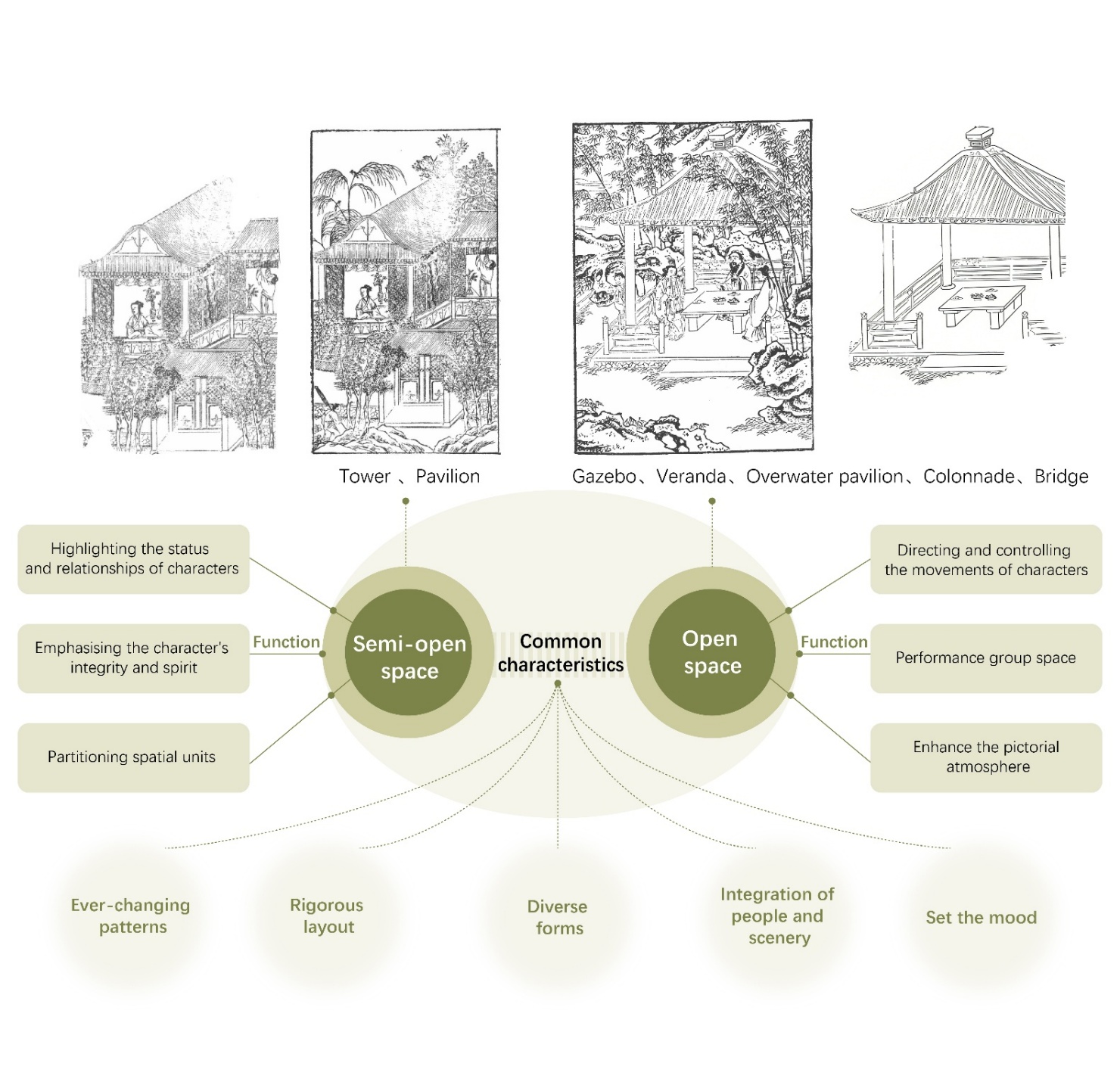
(1) Background: The Ming dynasty represented the peak period in the artistic development of drama printed editions, with Suzhou editions being particularly representative. In the course of localized evolution, these illustrations not only absorbed the brushwork techniques of the Wu School of painting but also integrated the literary sensibilities and aesthetic ideals of Suzhou-based writers, thereby forming an aesthetic character that combined literati elegance with secular expressiveness. In terms of visual representation, Suzhou illustrators and engravers paid particular attention to the depiction of Jiangnan garden landscapes. According to statistical analysis of more than 200 surviving illustrated drama printed editions from Ming-dynasty Suzhou, architectural landscape images account for 98%, making them the dominant visual type in regional printed illustrations. Taking this corpus of architectural landscape illustrations as its research object, this study explores their visual construction logic and spatial patterns within the developmental trajectory of printed drama illustrations. (2) Methods: This study adopts an integrated methodological approach combining iconographic analysis and visual narrative theory. Through documentary research and textual verification, it examines the contextual conditions underlying the formation of architectural landscape visual schemas. Case study analysis is further employed to investigate the morphological typologies and visual rhetoric embodied in these images. (3) Results: Architectural landscape illustrations exhibit clear characteristics of formalization in terms of schema typology, compositional structure, and layout conventions. Their representational language, decorative motifs, and spatial organization collectively enhance the immediacy and lyrical quality of the image–text narrative system. These features reflect deeper cultural tendencies in Ming society, particularly the growing emphasis on individual emotional expression and the aesthetic refinement of everyday living spaces. (4) Conclusion: Influenced by the emergence of early capitalist economic forms and the convergence of elite and popular cultural traditions, architectural landscape schemas in Ming drama printed editions extensively assimilated techniques from traditional painting as well as engraving practices associated with the Jinling and Huizhou publishing schools. Drawing upon Jiangnan gardens as their primary visual prototype, these illustrations established a distinctive visual paradigm for architectural landscape representation. At the narrative level, they were profoundly shaped by the concept of expressive representation (xieyi) and literati aesthetics, achieving both the visual translation of textual narratives and the construction of poetic aesthetic realms within the visual narrative field.