

Articles in this Volume

Research Article Open Access
Carrier, field, homogeneity: the construction of contemporary narrative fashion silhouettes
Article thumbnail
Based on Merleau-Ponty's body phenomenology and drawing on Bifei Cao's three-dimensional framework of "carrier, field, homogeneity", this paper systematically explores the narrative construction of contemporary fashion silhouettes. The research shows that: in the carrier dimension, fashion silhouettes become media of bodily perception and carriers of spiritual extension through perceptual intervention and cognitive reconstruction, realizing the narrative sublimation from individual perception to the spirit of the times; in the field dimension, silhouettes coexist dynamically in the fields of brand, exhibition and socio-culture, intertwining to form a temporal-spatial narrative system; in the homogeneity dimension, relying on embodied design and digital media, silhouettes break the boundary between clothing and body, and realize the symbiotic shift from external attachment to bodily extension. As a composite visual medium of bodily perception, spatial narrative and cultural spirit, contemporary narrative silhouettes provide theoretical perspectives and practical paths for the contemporary translation of traditional aesthetics and the construction of local design culture.
Show more
Read Article PDF
Cite
Research Article Open Access
Tragic beauty and cultural taste: a case study of Farewell My Concubine
This paper examines how tragic aesthetics is reshaped through a culturally embedded sense of beauty. Drawing on the classical theory of paradox and on the insights of scholars such as Qiu Zihua, it explores the ways in which the tragic spirit is absorbed into, and transformed by, a broader aesthetic tradition. Taking Farewell My Concubine as its case study, the paper focuses on how the film uses Peking opera not merely as a visual or narrative device, but as a medium through which restraint, harmony, resilience, and inner tension are brought into contact with the tragic subject's pursuit of freedom and resistance. In doing so, the paper argues that the work offers a meaningful reference for contemporary artistic creation.
Show more
Read Article PDF
Cite
Research Article Open Access
Misinterpretation mechanisms and intergroup conflict following the mainstream diffusion of internet memes: a meme archaeology and translational action study based on ACG subculture
This study examines ten Internet memes originating from the Anime, Comics, and Games (ACG) subculture—"Gugu Gaga", "Hakimi", "Manbo", "Nailong", "He Yiwei", "Fei Yangyang", "Mu Guizi", "Sao Furry", "Feizhai", and "Yuanpi"—as research samples. Drawing upon meme theory, diffusion of innovations theory, and cultural reproduction theory, it investigates the mechanisms through which these memes are misinterpreted after entering the mainstream and the intergroup conflicts that subsequently arise. A mixed-methods approach was employed. A total of 490 valid questionnaires were collected, including responses from 159 core ACG community members, 271 individuals with limited exposure to the subculture, and 60 participants with no prior engagement. In addition, five semi-structured in-depth interviews were conducted. The findings indicate that the dissemination of Internet memes follows a structural logic of "meme entropy increase". Context-stripping dissemination is characterized by spontaneity, near-zero dissemination costs, and high communicative returns, whereas efforts to preserve or restore the original context require substantial investment while carrying a considerable risk of backlash. This structural asymmetry constitutes the primary driving force behind intergroup conflict. Regarding patterns of misinterpretation, three major forms were identified—character simplification, semantic shift, and malicious stigmatization—which together form a differentiated spectrum of cultural harm. Based on these findings, this study proposes a lightweight contextual supplementation strategy, the "Meme Interpretation Card", to facilitate more accurate understanding. Survey results show that 74.7% of respondents expressed a willingness to read such explanatory materials, while more than 80% agreed that public education about meme origins and meanings could effectively reduce disputes. These findings suggest that reconciliation between online communities enjoys broad public support and represents a practical and feasible direction for mitigating intergroup conflict.
Show more
Read Article PDF
Cite
Research Article Open Access
Research on the formation of modern Xikang commercial network and the formation of ethnic community
Located at the border of Sichuan, Tibet, Yunnan and Qinghai, modern Xikang served as the core corridor for material exchange and ethnic interaction between the Han and Tibetan peoples. Building on the historical heritage of the traditional Ancient Tea-Horse Road, coupled with governance transformations brought by the bureaucratization of native officers in the late Qing Dynasty and the establishment of Xikang Province in the Republic of China, a three-level commercial network was gradually constructed within the region: Kangding as the first-level commercial hub, Lihua, Ba'an and Ganzi as secondary transit nodes, and township and monastery fairs as grassroots trading terminals. Shaanxi merchants, Sichuan merchants, Yunnan merchants, local Tibetan merchants and monastery caravans together formed a diverse business community. Cross-regional commodity exchanges promoted a stable economic symbiotic relationship among the Han, Tibetan, Yi and Qiang ethnic groups. Commercial circulation broke down geographical and ethnic barriers, and promoted the in-depth integration of language, customs and beliefs. The trade routes running through the entire territory simultaneously carried the downward transmission of national governance order, continuously nurturing the sense of regional ethnic community from three dimensions: economic foundation, cultural integration and national identity. Based on archives of the Kham region and local chronicles of the Republic of China, combined with existing research results on the history of Kham-Tibet, this paper sorts out the spatio-temporal evolution of the commercial network, explains the internal path of folk commerce shaping the frontier community, and provides an economic perspective for interpreting the exchange, interaction and integration of all ethnic groups in the southwest frontier in modern times.
Show more
Read Article PDF
Cite
Research Article Open Access
The internal mechanisms, practical risks, and countermeasures of historical nihilism in deconstructing young people's red memory in the digital intelligence era
Against the backdrop of the digital intelligence era, emerging media environments and new forms of social interaction have reshaped the ways in which young people access information and construct historical memory, while simultaneously creating new opportunities for the infiltration of historical nihilism. Through technology-driven dissemination, symbolic deconstruction, cognitive conditioning, and community-based communication, historical nihilism distorts young people's understanding of history, ultimately leading to deviations in personal values, disruptions in the intergenerational transmission of red memory, and growing risks to ideological security. Drawing upon the distinctive features of digital intelligent communication and the ideological characteristics of contemporary youth, this paper examines the mechanisms through which historical nihilism deconstructs young people's red memory and analyzes its practical consequences. It further proposes a systematic framework of countermeasures from four dimensions: advancing the digital-intelligent transformation of red education, regulating the operational logic of algorithmic recommendation systems, encouraging young people's active participation in the dissemination of red culture, and strengthening the rule of law in cyberspace governance. These measures are intended to provide theoretical support for consolidating the ideological foundation of young people, preserving the red legacy, and enhancing ideological and political education in the new era.
Show more
Read Article PDF
Cite
Research Article Open Access
Che Guevara as a commodity: revolutionary memory and the politics of the iconic T-shirt
Che Guevara T-shirt is one of the most recognizable popular icons of the twentieth century. This paper examines whether Guevara deserves his iconic T-shirt by comparing and contrasting two meanings of Che Guevara's image—the T-shirt as an honor that faithfully commemorates his political project, and the T-shirt as a cultural symbol that reveals what happened to that project after his death. Drawing on scholarship about revolutionary iconography, collective memory, the culture industry, consumer incorporation, and postmodern critical theory, the analysis traces the movement of Alberto Korda's photograph from a record of a historical figure to a standardized sign of rebellion. The Guevara T-shirt preserves a limited emotional vocabulary of courage, sacrifice, and nonconformity, but it usually removes Guevara's Marxism, anti-imperialism, commitment to armed revolution, and specific historical context. The paper therefore argues that Guevara does not deserve the T-shirt as a tribute. On the contrary, he deserves it in a paradoxical and diagnostic sense: the garment records capitalism's capacity to turn opposition into style while also leaving open the possibility that a political symbol could be reactivated in a new future context.
Show more
Read Article PDF
Cite
Research Article Open Access
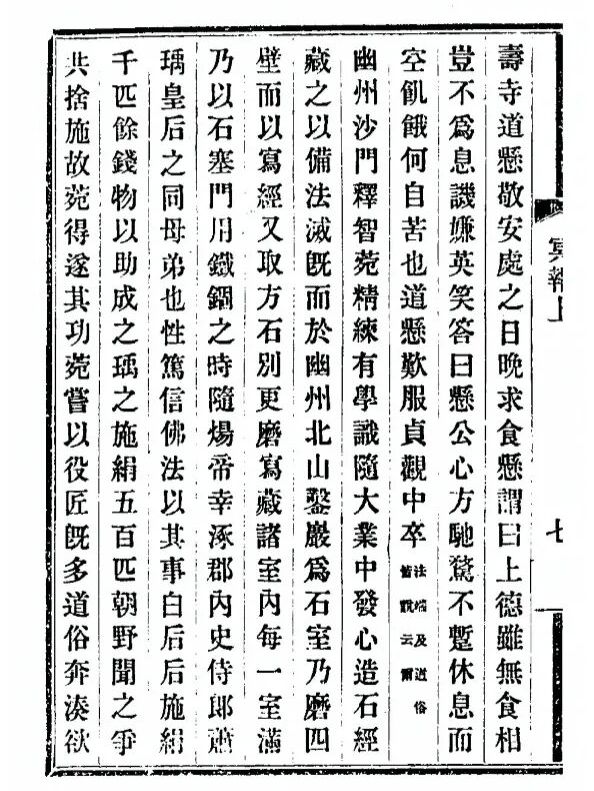
The economic, religious and political implications of Empress Xiao of the Sui Dynasty and her younger brother sponsoring the stone sutra carving led by Jingwan
Article thumbnail
The stone sutra project at Yunju Temple in Fangshan, Beijing, was initiated during the Daye reign of Emperor Yang of the Sui Dynasty and lasted for nearly a thousand years. It consumed incalculable manpower and materials, eventually forming the largest surviving and most completely preserved group of stone-carved Buddhist scriptures in the world. Empress Xiao of Emperor Yang and her younger brother Xiao Yu donated a total of 1,500 bolts of silk to fund the stone sutra carving undertaking. Why did the Xiao siblings donate silk bolts instead of copper coins or silver. What was the purchasing power of these 1,500 bolts of silk. Was this donation merely intended to support the sutra carving. Through rigorous textual research and analysis of historical documents concerning Sui politics, economy and military affairs, this paper explores the multi-layered implications behind the donation made by Empress Xiao and Xiao Yu.
Show more
Read Article PDF
Cite
Research Article Open Access
From artifact technology to material language: the contemporary artistic translation of "Ikkanbari" lacquer craft
Taking Japanese "Ikkanbari" lacquer craft as the research object, this paper explores the specific paths through which traditional making experience enters contemporary art. By means of literature review, artifact analysis and craft process analysis, the paper examines changes in paper layer forming, lacquer layer treatment, traces of making, and modes of artifact usage. The study finds that the contemporary value of Ikkanbari is concentrated in lightweight structures, layering processes, surface revelation and concealment, and bodily participation, all of which can be transformed into new form-making approaches and viewing experiences. For the contemporary development of traditional crafts, attention should be paid to the reorganization of materials, structures and usage relations, rather than remaining at the level of replicating traditional styles or decorating with cultural symbols.
Show more
Read Article PDF
Cite
Research Article Open Access
Privatization of symbols and publicization of meaning: the communication paradox in brand symbol protection—the case of LV vs. MollyTea
In July 2026, the trademark case by Louis Vuitton (LV) against MollyTea presented a classic communication paradox: while LV successfully defended its brand symbols legally, it faced collective pressure regarding the "symbolic meaning" of those symbols in the public sphere. The hashtag "MollyTea lost the lawsuit but won the hearts of the people", with a surge in consumer demand, constituted a public re‑signifying of brand symbol ownership. This paper analyzes the case from brand symbol capital and co‑creation of meaning theories. The study found that turning brand symbols into IP elevates visual symbols from "tools of identification" to "symbolic capital", accompanied by the "privatization" of symbolic meaning; in practice, meaning is never unilaterally determined by the brand but co‑created by brand, consumers, culture, and public discourse. In this incident, the public's experiential understanding of the four‑leaf clover motif, nationalism as a sacred value, and the brand ethics demonstrated by "MollyTea" during an unforeseen crisis collectively contributed to Louis Vuitton winning legally but losing public opinion, thereby reconstructing the public's understanding of the meaning of the Louis Vuitton brand symbol and the significance of its IP protection. When a brand uses legal means to reinforce the private property rights of a symbol, if that symbol overlaps with public culture, it may trigger a "publicization" backlash from consumers regarding the symbol's meaning. The public redefines ownership through discourse and consumer behavior. This article offers recommendations from a communication perspective for global brands in symbolic rights protection.
Show more
Read Article PDF
Cite
Research Article Open Access
Triple challenges and breakthrough paths for the inheritance and innovation of red culture in the new era
Advancing the inheritance and innovation of red culture in the new era is of great significance for fostering a new generation capable of shouldering the responsibilities of the times, strengthening cultural confidence, and contributing to the great rejuvenation of the Chinese nation. This paper examines three major challenges confronting the inheritance and innovation of red culture: the widening generational gap in cultural cognition, the disruptive impact of a fragmented communication ecosystem, and the imbalance between cultural resource preservation and development. In response, it proposes practical approaches from three dimensions: establishing mechanisms for intergenerational dialogue, improving the governance of online communication, and developing an integrated system for preservation-oriented utilization. These approaches are illustrated through representative cases, including the live-action performance Jinggangshan and the development of red culture in Anhui Province. The study argues that the effective inheritance of red culture depends on achieving a dynamic balance between preserving its fundamental principles and pursuing creative innovation.
Show more
Read Article PDF
Cite