Articles in this Volume

Research Article Open Access
A study of performing techniques in Czerny's The Art of Finger Dexterity, Op. 740
Article thumbnail
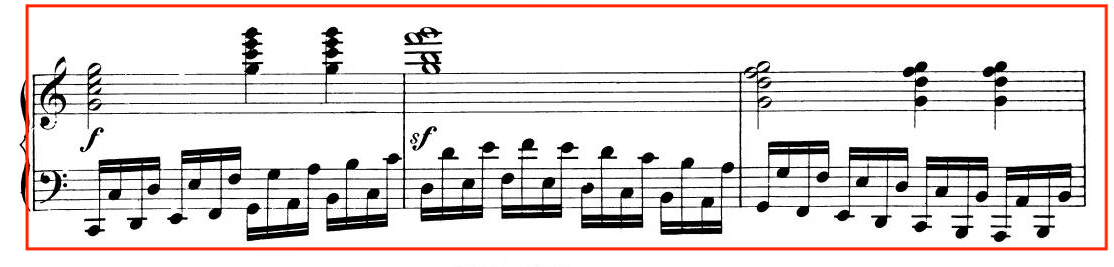
In piano teaching, etudes help players refine their playing skills by repeatedly practising specific notes and musical passages. This study takes Carl Czerny's The Art of Finger Dexterity (Op. 740) as its subject and combines a review of the literature, performance practice and inductive analysis to examine and classify selected playing techniques, focusing on performance approaches to octave, double-note and arpeggio techniques. It examines the key performance requirements and training methods for these techniques and explores their application in other piano works, with the aim of helping piano learners overcome common technical difficulties and improve their playing skills.
Show more
Read Article PDF
Cite
Research Article Open Access
Making sustainability visible: character storytelling and advocacy strategies in micro-documentaries
The UN's Sustainable Development Goals (SDGs) matter, but to many people they still feel too abstract to hold attention. Micro-documentaries are short and centred on real people, so they can connect public audiences with large social issues more directly. This study examines a social practice project called The Loop of the Wilderness and asks how micro-documentaries can make broad ideas easier to grasp through one person's story. The research suggests that a single personal narrative can lower the threshold for understanding, build emotional engagement, and help viewers connect large issues to their own lives. In this project, the leather-carving Ayis it met in Kashgar, the local customs, and the direct experience of picking up trash on the plateau gave the story a stronger sense of reality. Even so, one person's story cannot speak for everyone, and it does not replace systematic evidence. Effective communication needs to keep "telling a good story" and "being trustworthy with facts" in balance.
Show more
Read Article PDF
Cite
Research Article Open Access
A study on C-E translation strategies of political metaphors with Chinese characteristics from the perspective of cognitive linguistics
Chinese official publicity discourse abounds in culturally exclusive political metaphors carrying unique Chinese governance concepts, which create cognitive mismatches between Chinese and English conceptual mappings in international communication. Drawing on cognitive linguistic theories including Conceptual Metaphor Theory, Image Schema and Frame Semantics, alongside Newmark's semantic and communicative translation, this study collects 90 officially released Chinese political terms with parallel English translations as corpus. Adopting the MIP metaphor identification procedure and qualitative case analysis, this study sorts out five categories of political metaphors and summarizes four mainstream translation strategies applied by official translators. Further analysis demonstrates that the overlap of cross-linguistic conceptual mappings, vacancy of cultural frames and communicative priority of overseas publicity jointly govern translators' strategic choices. This study thus supplements empirical studies on political discourse translation from cognitive perspectives and offers operable cognitive criteria for translators engaging in CPC and government external publicity texts.
Show more
Read Article PDF
Cite